
Burton Resident Lookup Records
Match each Burton resident lookup result to the job its source actually does. The Burton Assessor supports a current owner or taxpayer label. The Genesee Register of Deeds supports a dated transfer of the property. A court filing names a party to a case, nothing more. A directory entry is a dated appearance, not proof of where someone lives today. Michigan adds specialized record systems. But the local parcel and deed trail still carries the weight. No official citywide resident roll exists for Burton. So treat any complete public list with doubt.
| Record | What It Confirms | Where | Access |
|---|---|---|---|
| Parcel or tax roll | Recorded owner or taxpayer, parcel, situs, and mailing fields | Burton Assessor and BS&A | Public search or counter; card and sketch copies have a stated fee |
| Deed index | Dated grantor, grantee, instrument, and legal-description trail | Genesee Register of Deeds | Online and self-service limits; copies and certified copies are paid |
| Voter record | Registration jurisdiction and legally releasable fields | Michigan SOS QVF and Burton Clerk | Personal MVIC route or FOIA, subject to redactions and ACP protection |
| Directory or archive item | Dated name and address listing or institutional appearance | FPL, Library of Michigan, NARA, or archives | Collection, year, and access terms vary |
| Vital record | Official event record or a lead for further research | MDHHS or Genesee County Clerk | Eligibility, ID, payment, and certificate type control access |
| Court docket | Party, case, event, or disposition as displayed | MiCOURT, 67th District, Circuit, or Probate | Public search and request routes have confidentiality limits |
| License or entity filing | Michigan license status or a dated business role | LARA MiPLUS or MiBusiness | Public search, with role and residence caveats |
Begin with the record that fits the fact you already hold. An address question belongs in a parcel search. An estate question belongs with Probate. A historical household question belongs in a dated directory. For the older address trail, the Burton city directory collections offer a deeper historical shelf. No current property lookup reaches that far back.
Define Each Burton Record Role
Clear labels keep a weak match from turning into a false claim. A parcel owner or taxpayer of record is not always the person living there. A voter address is a registration fact, not a certificate of current residency. A license is a professional record. A corporate hit marks a role in a filing. A court result is a party record. Keep the source label beside the name rather than calling every hit a resident record. A sound match needs two independently dated sources agreeing on meaningful details. A parcel and a deed can align on a legal description. A directory entry and a newspaper item can align on an address and year. Common names demand at least two corroborators. These can include a street, a parcel number, an organization, a dated deed, a relative named in an obituary, or a consistent middle initial. A shared surname along one long street proves nothing.
- Parcel
- A tax-map unit tied to land records, often carrying a situs address and a separate mailing address.
- Record role
- The limited fact shown by a source, such as owner, taxpayer, directory entry, licensee, officer, or court party.
- Confidence note
- A short label such as current parcel record, dated directory entry, entity role, or court-party record that states what the evidence can support.
Note: A later, better-dated record can settle an older conflict, but it does not erase the earlier source or its original jurisdiction.
Verify a Burton Resident Lookup
Tie every name to one record first. Then widen the search. Start from an exact address whenever you have it, and keep apartment or unit details intact. Burton sits beside Flint and several townships, so a source may label the same general area with a different community name. Keep Burton and Flint results separate. That way you build a documented chain of facts rather than a broad list of loose name matches.
- Search the Burton Assessor or Parcel History record and save the parcel or tax-map number, the owner or taxpayer label, the legal description, and the source date.
- Use the Genesee deed index to compare current grantee, earlier grantor, instrument date, and document number or Liber/Page. A legal description can be more stable than a street number.
- Run a party search only in the court system that fits the matter, then compare court, case type, date, and party role instead of relying on a name alone.
- Use a vital, directory, obituary, or archive source only for the question it can answer. Order a custodian copy when the actual document, rather than an index entry, matters.
- Write down any conflict and label the result as unresolved until two sources support the same conclusion.
Use the Michigan Voter Information Center for your own status. It handles election logistics too. It is not a public city roster, though. A public-record request goes to the jurisdiction instead. It should state the election or snapshot date, the fields sought, and a date range. Michigan guidance withholds selected QVF fields. Withheld items include phone and email, signatures, driver or state-ID numbers, month and day of birth, and Address Confidentiality Program registrations.
Burton Name-Variant Matching
Build a controlled name list first. Include full name, initials, middle name, and any suffix. Add a documented former name, spelling variants, and entity spellings as well. Search a surname alone only within a bounded city, date, street, or record collection. Keep the spelling the record itself used. A later source may show a different version.
A sample result inventory should hold only the fields that explain a match. Skip private details you do not need. For a parcel, note the parcel number, source date, address, and owner or taxpayer label. For a deed, record the grantor, grantee, instrument, recording date, and document number or Liber/Page. A directory or archival entry needs the publisher or collection, year, and page. It also needs the exact entry and geography. Close with the matching fields and any conflict still open.
| Result field | Why it matters |
|---|---|
| Source and date | Distinguishes a current record from a historical appearance. |
| Name as displayed | Preserves the original spelling for later comparison. |
| Role or party label | Shows whether the source identifies an owner, officer, licensee, or court party. |
| Record identifier | Links a parcel, case, filing, document, or page to the controlling custodian. |
| Conflict note | Prevents an address or name mismatch from being silently combined. |
Burton Court Lookup Fallbacks
Start with the official MiCOURT case search for Michigan trial-court lookups. Burton belongs to the 67th District Court, Burton Division D67-2B. Court systems stay separate. District, circuit, probate, federal, juvenile, and administrative records never form one unified search, and the MiCOURT page publishes no stable field labels, filters, sort order, or result-card fields, so do not guess those details.
Records before July 31, 2014 require a records request. The 67th District Court cites Michigan automatic clean-slate changes for that cutoff. Give the clerk the full known name. Include any alternate spelling. Add the case number, date range, and case type if you know them, and say whether you want inspection, ordinary copies, or a certified copy. Requests may be dropped off or mailed to Records Processing at 630 S Saginaw Street in Flint. Mailing can delay processing. Ask what is missing rather than inventing a case number.
Use the 67th District Court records route before trusting an older online absence.
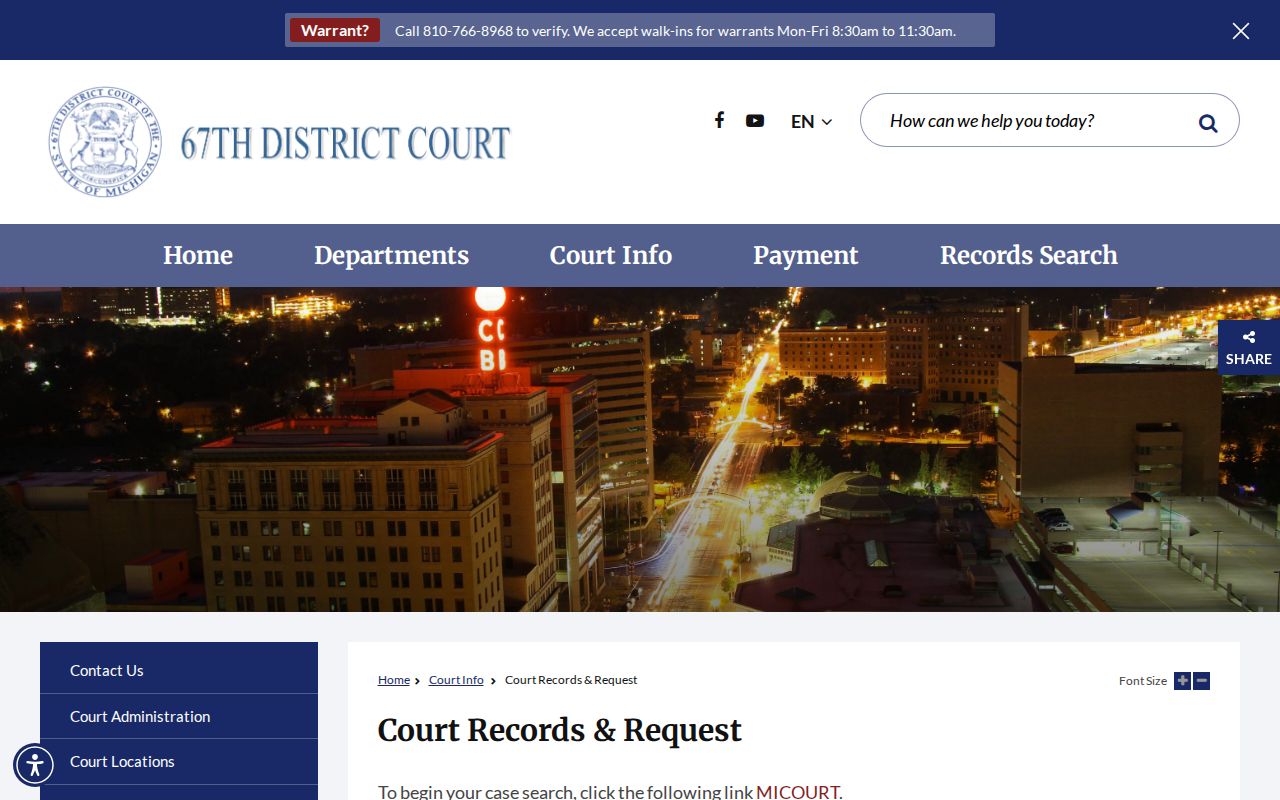
Clerk-controlled copies sit behind a request path. That path still governs the pre-2014 record range and any copy the court itself holds. A docket lists filings and events. It is not proof that every allegation is true. A safe inventory records the court and case number. It also records the title as displayed, filing date, case type, party role, event or disposition label, and document date. Note whether a certified copy is available. Leave out an unnecessary home address. Leave out a date of birth, a minor's identity, or any sealed detail. An empty search result does not mean a person has never had a case.
- Docket
- The court-maintained sequence of filings, hearings, orders, and events in a case.
- Index versus image
- An index identifies a record and its fields; an image is the underlying scanned document or page, which may have separate access rules.
- Certified copy
- A copy issued or authenticated by the custodian for uses that require the office's certification rather than an ordinary copy.
Note: A clerk or a public-access terminal can show more than a static screen, but the court alone decides what may be viewed or copied.
Michigan Vital Records for Burton
Michigan has registered vital events since 1867. Even so, a vital record is an access-controlled event file. It is not a free local name index. The state accepts orders by mail, and it also works through an authorized online service. You can order by phone, by dropbox, or in person with an appointment. The Genesee County Clerk/Register keeps records of births, deaths, and marriages that occurred in the county. Burton's City Clerk handles city administrative questions. The state publishes no Burton-specific public index of births, deaths, or marriages.
Current MDHHS guidance lets anyone request a death or marriage copy in writing. The fee must be prepaid. Birth records under 100 years carry relationship, identification, and documentation limits. Older birth records are generally open under that same guidance. MCL 333.2885 sets separate genealogy thresholds. Births must be at least 110 years old. Death, marriage, and divorce records must be at least 75 years old. Always follow the current custodian form. A certified copy and a genealogy copy are different products. Say which one you need. The Michigan Vital Records order information page shows the current channel, eligibility rules, processing notice, and fee before you file.
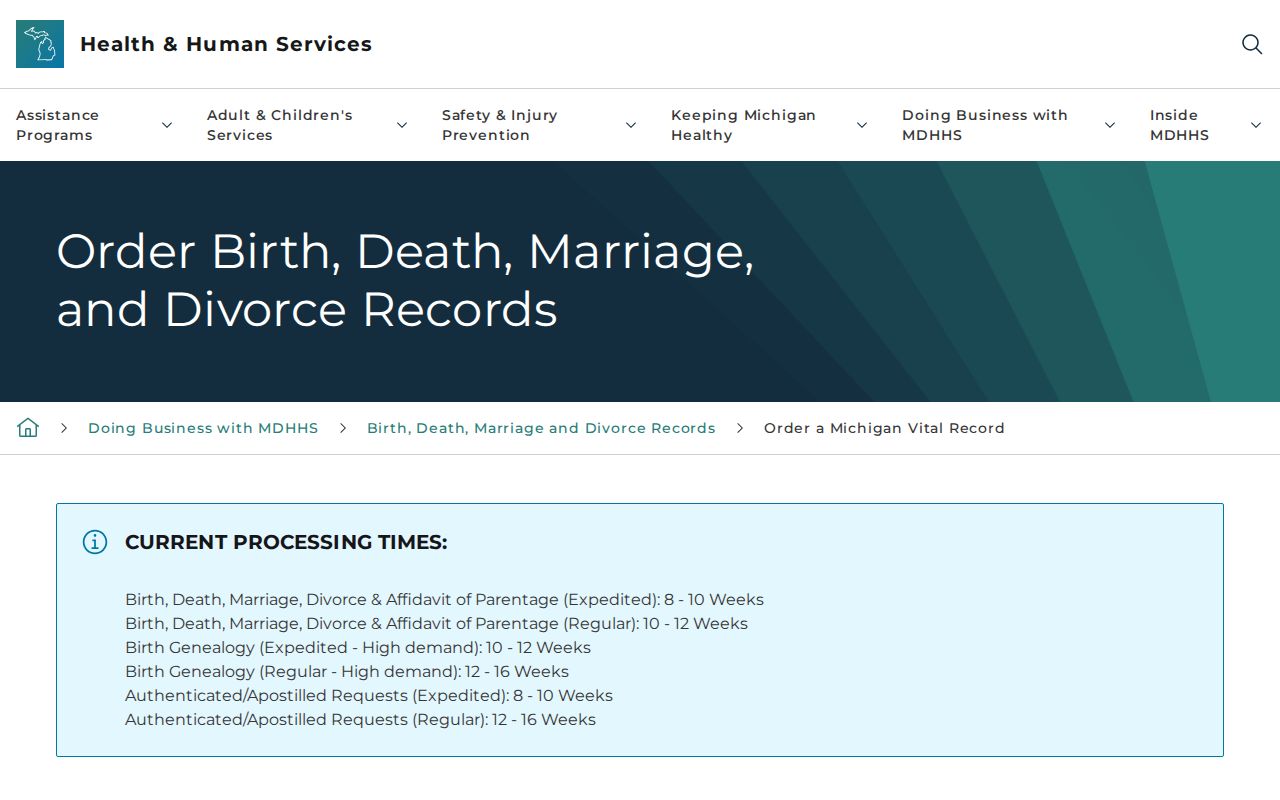
Details decide a vital-records request. State the record type first. Include the full legal name and any known variants. Add the event date or a narrow date range. Add the event place, your relationship when it matters, and whether the copy must be certified. Say how you want it delivered. Divorce is a court record, not a county-clerk certificate. For early family-history work, a library or archive index can point to useful evidence. An index is still no substitute for the certificate itself.
Burton License Lookup Limits
LARA MiPLUS offers free public license records. A report can list name, profession, license type, status, expiration, address, issue date, specialty, and email. A license proves a Michigan professional relationship only. It does not prove a Burton residence. Certified verification is a separate paid service, so label any result as a Michigan professional-license record and keep its source date. The MiPLUS result screen helps separate a credential from a location claim.
Michigan's MiBusiness Registry Portal handles entity searches, filings, and certificate or copy orders through online, mail, or in-person routes. An entity may carry a Burton address. Its officers can still live anywhere. The individual-role search supports role filters. Name searches offer begins-with, exact-match, keyword, and Soundex modes. Keep the entity, the role, the filing date, and the registered office as separate facts in any note you keep. Burton defines local license categories. The city publishes no citywide public register with live fields. Do not promise a local person search.
Burton Registry Lookup Limits
The Michigan State Police Sex Offender Registry is a separate public system. It offers several search paths. You can search by name, registration number, MDOC number, street address, city, county, ZIP, or a neighborhood radius. A name search needs both first and last names. Partial matches are allowed. An address search needs the street plus a city, county, or ZIP. Radius choices run 0.25, 0.5, 1, 2, and 5 miles. Only published details appear. Use the Michigan State Police registry under its posted terms and stated limits.
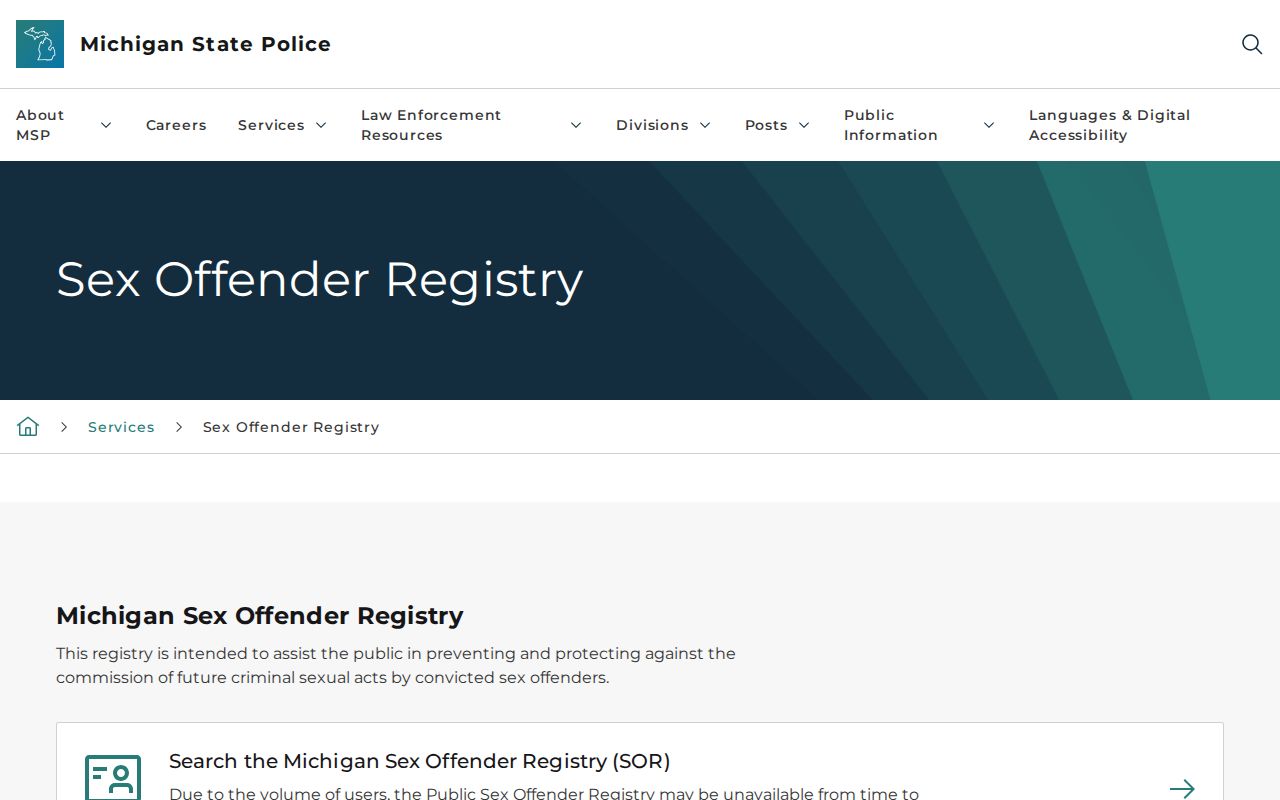
The state registry is one search route among several. It is not a complete criminal history, and it claims nothing about a person's current activities. ICHAT works differently. A name search costs $10. It covers felony and serious-misdemeanor records submitted from Michigan's 83 counties, with stated exclusions for suppressed material, warrants, federal or tribal records, traffic matters, juvenile records, certain local misdemeanors, and out-of-state material. The query uses first name, last name, gender, and date of birth. OTIS covers state prisoners, parolees, probationers, and people discharged from supervision within three years. It is not a county-jail roster. Genesee County publishes no public online jail roster.
Genesee Records Volume Context
Volume shapes every search in Genesee County. The Register of Deeds handles roughly 85,000 documents a year. The office also issues more than 35,000 certified vital record copies annually. Numbers like these reward precision. A Burton researcher who supplies exact names, date ranges, parcel numbers, document numbers, and record types gets a workable search; a vague one can return piles of results, added fees, and delays that never settle identity. Treat the figures as system volume. They say nothing about how many Burton residents appear anywhere in the files.
The digitization timeline has its own limits. Tyler Eagle arrived in 2018. Vital-records software followed in 2020. Documents from 1970 forward are described as digitized or open to public access, yet the Register of Deeds warns that anything before 1983 stays offline. Digitization, public access, and online name searching are three different starting points, so do not confuse them. When a modern search on an older Burton record comes back empty, that blank is not final; turn instead to the historical indexes, the office itself, the library, or the archives.
Privacy in a Burton Resident Lookup
Michigan's FOIA, MCL 15.231 et seq., opens a path to inspect or copy records. The records must sit with the right public body. It does not obligate one agency to dig through another's system. A Genesee County or MDHHS request stands on its own. Written requests directed to Burton must identify "FOIA" and carry the requester's contact information. Name the agency, the record series, and the date range. Add the address or parcel, plus the format you prefer. The Attorney General cites a general five-business-day response window, with one possible ten-business-day extension. Fees and exemptions ride on the specifics of each request.
Access comes with guardrails. Skip driver-record personal information and signatures. Skip private phone and email fields, minor identities, and sealed or expunged material. Pass over extra vital-certificate details and any Address Confidentiality Program substitute address. No single Michigan form erases a person from every public record. Corrections go to the custodian who controls the field. That custodian may be the Assessor, the Register of Deeds, the Burton Clerk, the Michigan SOS, or LARA. A Burton resident lookup done lawfully respects those boundaries.
Lawful use. Burton resident lookup records can support personal research, family history, civic questions, and safety awareness. Never use them to stalk, harass, intimidate, or attempt to locate a protected person.